

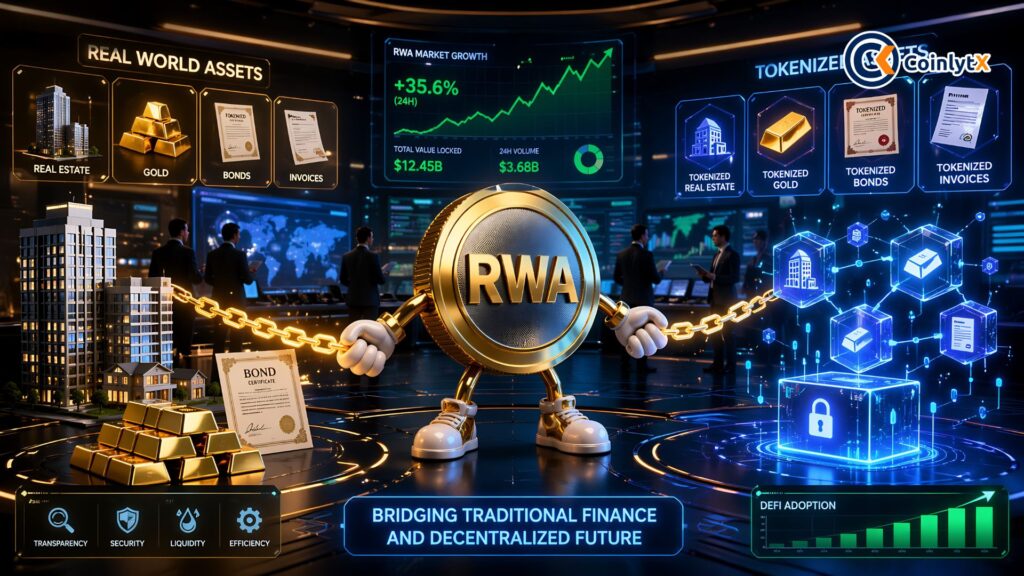
The blockchain industry is moving beyond cryptocurrencies and NFTs, and one of the fastest-growing sectors today is Real World Assets (RWA). This new Web3 trend is changing
how traditional assets are owned, traded, and managed through blockchain technology. From real estate and bonds to gold and invoices, RWA is opening a new bridge between traditional finance and decentralized finance.
Real World Assets (RWA)
Real World Assets in blockchain simply mean physical or traditional financial assets converted into digital tokens on a blockchain.
These tokenized assets represent ownership or rights over real assets and can be bought, sold, or traded more efficiently. This innovation is creating fresh opportunities for investors and institutions.
RWA crypto projects
One major reason why RWA crypto projects are gaining attention is liquidity. Traditional assets like real estate are often expensive and difficult to trade.
Through tokenization, these assets can be divided into smaller digital shares, allowing more people to invest with lower capital. This concept is making investing more accessible than ever.
Tokenization asset
Another important benefit of real world asset tokenization is transparency. Blockchain records every transaction securely and publicly, reducing fraud and improving trust.
Smart contracts can automate settlements, ownership transfers, and payments without intermediaries. This lowers costs and increases efficiency.
Real World Assets in Blockchain
The rise of RWA is also pushing decentralized finance into a new phase. Earlier, DeFi was largely dependent on crypto-native assets, which were often volatile.
Now, integrating real world assets like treasury bonds, real estate, and private credit adds more stability to DeFi ecosystems. This is why many experts see Real World Assets in Blockchain as a major evolution for Web3.
Institutional adoption is another reason this sector is growing. Big financial players are exploring tokenized bonds, digital securities, and blockchain-based settlement systems.
As regulations improve, more traditional finance companies may enter the RWA market, increasing mainstream adoption.
Real economic value
Some of the most discussed use cases of RWA in Web3 include tokenized real estate, government bonds, commodities like gold, supply chain finance, and invoice financing.
These use cases show that blockchain is no longer limited to digital assets only. It is moving into real economic value.
Future of Blockchain asset
The future of blockchain asset tokenization looks strong because it solves real problems.
It can unlock liquidity in illiquid markets, improve global access to investments, and create more efficient financial systems.
Many analysts believe the RWA sector could become one of the biggest growth narratives in Web3 over the coming years.
However, challenges still exist. Regulation, legal frameworks, custody solutions, and asset verification remain important issues. But despite these hurdles, innovation in this space is moving quickly.
Real World Assets crypto
As Web3 matures, RWA crypto could become one of the strongest sectors connecting traditional finance with decentralized technology.
Many investors now see it as more than a trend; they see it as a long-term transformation.
conclusion
Real World Assets in Blockchain are shaping the next big Web3 trend by bringing real economic value onto decentralized networks. As tokenization grows, RWA may play a major role in the future of finance and become one of the most important sectors in the blockchain industry.