

Introduction:
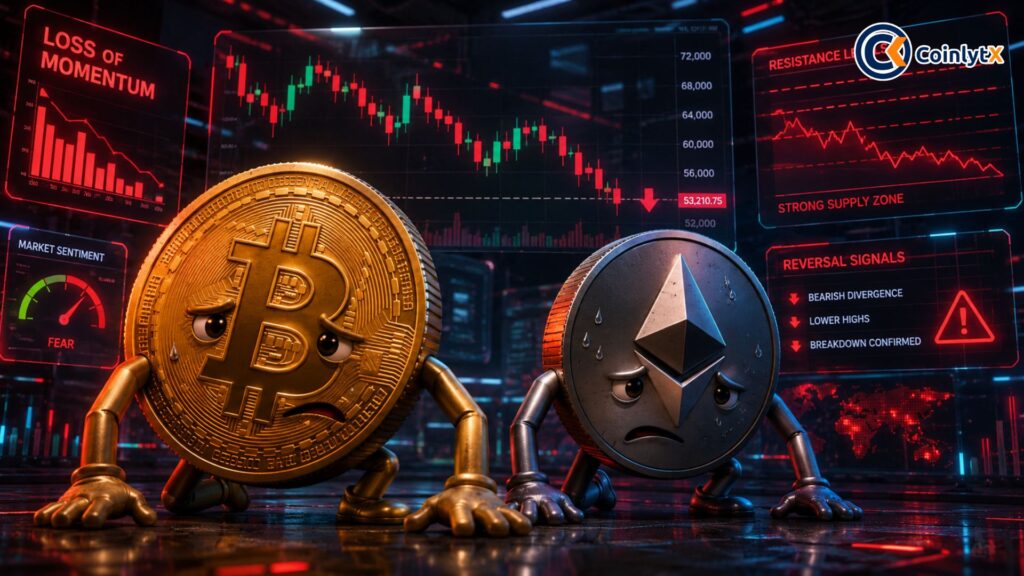
The cryptocurrency market is showing signs of slowing recovery as Bitcoin and Ethereum continue struggling below major resistance levels. After weeks of positive momentum earlier this month, both leading digital assets have entered a consolidation phase, creating uncertainty among traders and investors.
Market analysts believe that while overall sentiment in the crypto industry remains cautiously optimistic, the inability of Bitcoin and Ethereum to break above important technical barriers is limiting further upward movement. Investors are now closely monitoring price action, trading volumes, and macroeconomic developments to determine the next direction for the market.
Despite temporary weakness, many experts still view the current phase as part of a broader long-term recovery cycle for cryptocurrencies.
Bitcoin Struggles Below Key Resistance
Bitcoin, the world’s largest cryptocurrency, recently attempted to push higher but failed to maintain momentum above critical resistance zones. The digital asset continues trading within a narrow range as buyers and sellers compete for market control.
Analysts say resistance levels are important because they often represent price zones where investors begin taking profits. If Bitcoin cannot successfully break above these levels, short-term corrections or sideways movement may continue.
Several factors are influencing Bitcoin’s slower recovery, including reduced trading activity, uncertainty around global interest rates, and cautious institutional sentiment. While some investors remain bullish on Bitcoin’s long-term future, many traders are waiting for stronger confirmation before increasing exposure.
Technical experts suggest that a successful breakout above resistance could restart bullish momentum and improve overall market confidence.
Ethereum Also Faces Market Pressure
Ethereum, the second-largest cryptocurrency by market capitalization, is experiencing similar challenges. Despite continued interest in blockchain technology and decentralized finance projects, Ethereum has struggled to regain strong upward momentum.
Crypto analysts believe investors are becoming more selective after recent market volatility. Lower trading volumes and cautious market sentiment have limited Ethereum’s ability to sustain major rallies.
At the same time, Ethereum’s long-term fundamentals remain strong due to ongoing network upgrades, growing adoption of smart contracts, and increasing institutional interest in blockchain ecosystems.
Many traders are watching Ethereum closely because its performance often influences the broader altcoin market.
Market Sentiment Remains Mixed.
The overall cryptocurrency market currently reflects a mix of optimism and caution. Some investors believe the recent slowdown is temporary and part of a healthy consolidation process before another upward move.
Others remain concerned about macroeconomic uncertainty, regulatory pressure, and global financial conditions that could continue affecting risk assets like cryptocurrencies.
Institutional investors are also closely observing market conditions. Although long-term interest in digital assets remains stable, many large firms appear to be waiting for stronger technical signals before making aggressive investment decisions.
Meanwhile, retail traders continue looking for opportunities in both Bitcoin and altcoins as volatility creates short-term trading possibilities.
What Could Happen Next?
Market analysts suggest that the next major move for cryptocurrencies will depend heavily on whether Bitcoin and Ethereum can break through key resistance levels. A strong breakout could attract fresh capital into the market and improve investor confidence.
However, if resistance continues holding, the crypto market may experience extended consolidation or additional short-term corrections.
Despite current challenges, blockchain adoption, institutional participation, and technological innovation continue supporting the long-term outlook for the cryptocurrency industry.
For now, investors remain focused on upcoming economic data, crypto market trends, and technical indicators that may shape the next phase of digital asset recovery.