
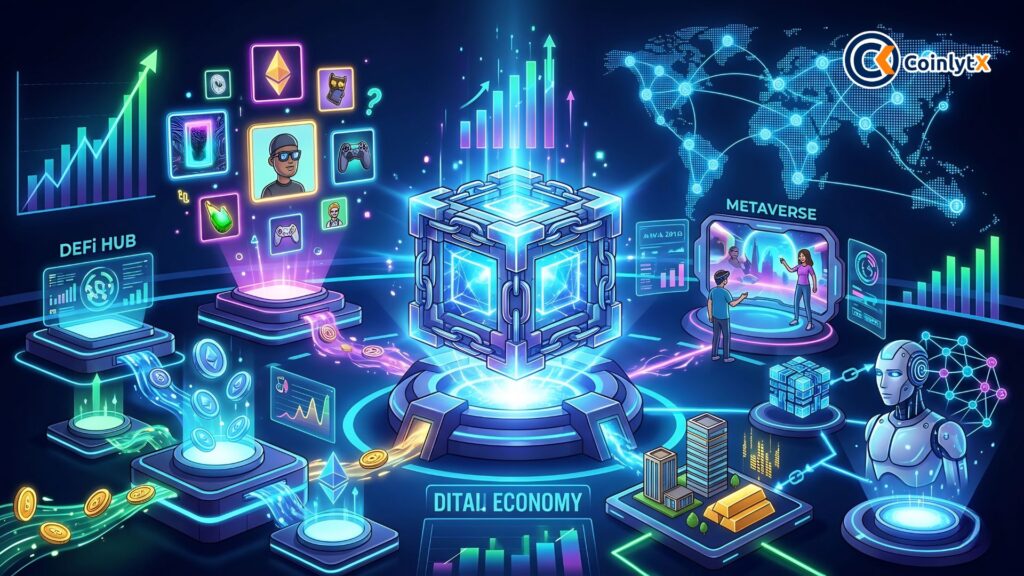
Blockchain technology is moving beyond hype and becoming a real force in digital innovation.
In 2026, the Web3 ecosystem is expected to grow faster as businesses, developers, and users adopt decentralized technologies in everyday life.
From decentralized finance to tokenized assets and AI-powered applications, the future of blockchain looks more practical, scalable, and user-driven than ever before.
Blockchain trend
One of the biggest blockchain trends in 2026 is the rise of Real World Asset (RWA) tokenization.
Traditional assets like real estate, commodities, bonds, and even art are being brought on-chain.
This trend is opening new investment opportunities while improving transparency and liquidity.
Many experts believe tokenized assets could become a major pillar of the Web3 economy.
Future of web3
Another major shift shaping the future of Web3 is the growth of Layer 2 scaling solutions.
High fees and slow transactions have been challenges for blockchain adoption, but solutions like rollups and sidechains are making networks faster and cheaper.
In 2026, scalable blockchain infrastructure could help support mass adoption across finance, gaming, and digital identity.
Decentralized finance
Decentralized Finance (DeFi) is also evolving. Instead of only focusing on yield farming and trading, the next phase of DeFi is moving toward sustainable products such as decentralized lending, on-chain insurance, and institutional-grade financial tools.
This trend could make blockchain more attractive to mainstream users and businesses.
AI & Blockchain
One of the most exciting Web3 trends in 2026 is the combination of Artificial Intelligence and Blockchain.
AI-powered smart contracts, decentralized AI networks, and blockchain-based data verification may redefine automation and trust online.
As concerns over AI transparency grow, blockchain could become the foundation for verifying data ownership and authenticity.
Blockchain Gaming
The blockchain gaming sector is another area expected to expand rapidly.
In 2026, Web3 gaming may move beyond speculation and focus more on real gameplay, digital ownership, and player-driven economies.
NFTs could shift from collectibles toward practical in-game assets with utility across ecosystems.
Decentralized Identity
Decentralized Identity (DID) is also becoming a powerful trend.
Instead of relying on centralized platforms for identity verification, users may control their digital identities through blockchain wallets.
This can improve privacy, security, and user ownership in the Web3 space.
Blockchain technology
Interoperability is another key theme in the future of blockchain technology.
In earlier years, many blockchains operated in isolation, but 2026 could see stronger cross-chain communication.
Projects focused on interoperability may help connect ecosystems, allowing assets and data to move seamlessly across networks.
Regulation will also play a major role. While stricter rules may challenge some projects, clearer regulations could help legitimize blockchain innovation.
Compliance-friendly Web3 projects may attract institutional adoption and bring more stability to the market.
Sustainability is becoming harder to ignore as well. Many next-generation blockchains are focusing on energy efficiency and greener consensus models.
Eco-friendly blockchain infrastructure may become a competitive advantage as adoption grows.
How to watch web3 in 2026
Looking ahead, Web3 in 2026 may be less about speculation and more about utility.
The industry is shifting from experimental projects toward real-world solutions.
Whether through tokenized finance, decentralized identity, AI integration, or scalable infrastructure, blockchain is entering a phase of maturity.
Conclusion
The future of blockchain is not just about cryptocurrencies anymore. It is about building a decentralized internet where ownership, transparency, and innovation work together. For investors, developers, and businesses watching blockchain trends 2026, the next wave of Web3 could offer some of the biggest opportunities yet.