
Quick Takeaways
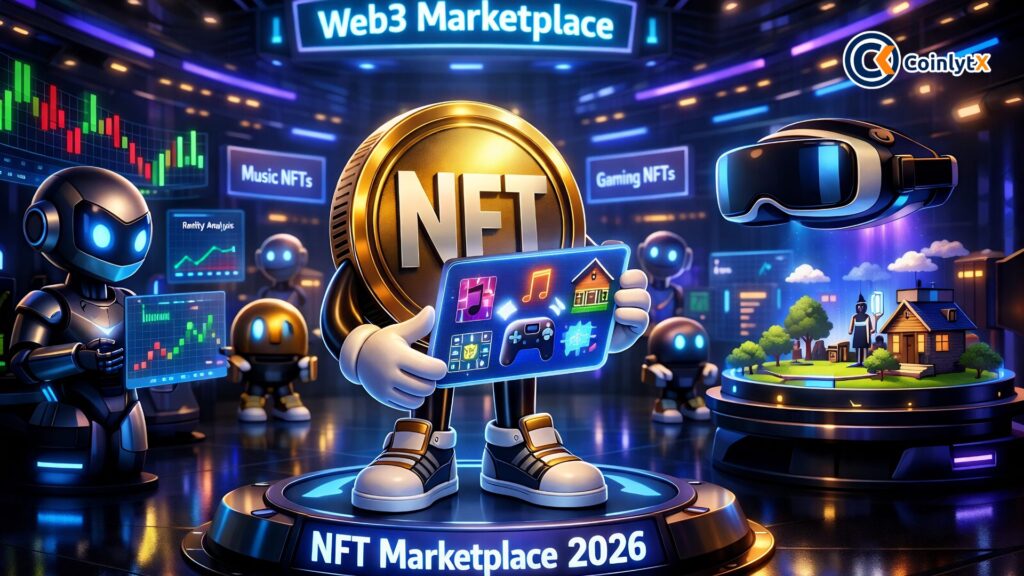
- In 2026, NFT marketplaces will become Web3 ecosystems with real-world uses.
- The use of AI and tokenizing real-world assets will drive the growth phase for NFT marketplaces.
- NFT platforms are being shaped by chain functionality and regulation.
NFT Marketplaces in 2026 Are Changing. In 2026, NFT marketplaces will look really different from what they used to be. There are no longer places to trade digital art.
Now they are like digital worlds. These platforms help with gaming stuff, financial things, and even real-world ownership. This change is part of a shift in the Web3 world.
People now want NFTs to be useful, and not just for speculation. NFTs need to give users value, access, or ownership benefits.
Because of this, marketplaces are becoming the backbone of stuff. They help power economies in many industries.
This change is a dl for NFTs and how we use them. The NFT marketplaces are changing to give users more. NFTs are here to stay and are often used now.
From Digital Art to Real-World Asset Tokenization
One of the changes in 2026 is real-world asset tokenization. This means that now NFT marketplaces do not just host art, but also tokenized versions of real-life things.
These things include estate, luxury goods, and collectibles. Ownership of these assets is. Recorded on a public ledger.
This makes it harder for people to cheat and makes it clear who owns what. It also allows people from all over the world to invest in high-value assets.
Investors can now buy a part of an asset, not just the whole thing. This makes it easier for more people to invest.
Businesses also benefit from this way of doing things. They can settle deals faster and more easily.
Tokenization helps connect finance with blockchain technology. Many big institutions are starting to use this way of tokenizing assets. It is becoming very popular quickly.
AI Integration Transforms NFT Marketplaces
AI integration is changing the way NFT marketplaces work. Artificial intelligence is really important for NFT platforms now.
Marketplaces use AI for a lot of things. These things are finding accounts, making new content, and making the experience better for each user.
The AI checks if the digital assets are real or not. This happens fast. It stops scams. Makes users feel safer. Some platforms even make NFTs using AI when users want them to.
Users can make their own music or things for games easily. AI also helps users find things they like.
It does this by showing them things that’re just for them. This makes users like the platform more. Come back often.
When you put AI and NFTs together, it makes things possible in Web3. It makes marketplaces smarter and better at what they do.
Cross-Chain Ecosystems Become the New Standard
The way people use blockchains is changing. Cross-chain ecosystems are what everyone wants now. People do not want to use one blockchain anymore.
They want to be able to use blockchains like Ethereum, Solana, and Polygon. Nowadays, NFT marketplaces let users work with networks.
People can. Trade NFTs on different blockchains. This makes it easy for users to move their assets from one network to another. Cross-chain ecosystems are good because they help people use blockchains easily.
This is better for everyone because it gives users options and makes the whole system more flexible. It also means that users do not have to rely on one blockchain.
Cross-chain functionality is something that most platforms have now. Cross-chain ecosystems support the growth of a unified Web3 economy, and cross-chain ecosystems are a part of this.
Gaming and Metaverse Drive NFT Adoption
Gaming is still one of the uses for NFTs. NFT marketplaces are now a part of gaming economies. Players. Sell things like game items, characters, and virtual land.
These digital items have value. They can be used in games and on different platforms. This creates a virtual world.
When gaming meets the Metaverse, it opens up more opportunities. Users can. Make money from digital experiences. Game makers also have ways to make money.
NFTs help create economies driven by players. They can grow really big. This is why more and more people are getting into NFTs.
Regulatory Clarity Brings Institutional Confidence
The rules are getting clearer for the NFT market in 2026. Governments are making it easy for people to understand what they can and cannot do with assets.
Now, when you buy or sell NFTs, the places where you do this have to follow the rules. They have to check who you are and make sure you are not doing anything
This makes big companies and investors feel safe when they deal with NFTs. They do not have to worry about getting in trouble with the law.
Companies can now plan for the term when it comes to NFTs. Following the rules helps NFTs become more useful and not just a fad.
This change is good for the NFT market because it helps it grow in a way. Big companies and investors are going to start working with NFTs.
Future Innovations Beyond 2026
The NFT marketplaces are changing fast. Lots of things are happening that will take them to the next level. Digital identity systems using NFTs are starting to appear.
Users will be able to store their documents, like certificates, IDs, and credentials, right on the blockchain.
The idea of owning a part of something will become more popular across types of assets. NFTs that you can subscribe to are also becoming more popular.
This means creators can give access to their content to people who own their tokens. Tools that use AI to help create assets will get better.
Users will be able to make assets directly on platforms. The lines between the digital worlds will get blurry. NFTs that are connected to products will become normal.
These changes will help us think about ownership in a way. NFT marketplaces will keep changing. NFTs will play a role in these changes. NFTs are changing how we think about ownership.
Challenges Still Facing NFT Marketplaces
Despite the growth challenges, they still exist in 2026. The NFT market still faces issues. User education is a problem.
Many people do not understand NFTs. Security risks are still a concern for all platforms. Hackers keep trying to steal assets.
Changes in regulations might affect how the market works. Different platforms still do not work well together. This makes it harder for users.
The value of NFTs can change quickly. This makes investors worried. However, these challenges make platforms better.
They encourage platforms to improve their technology. They also make platforms easier to use. NFT marketplaces keep working on these issues.
NFT platforms are trying to solve these problems. The NFT market is still learning.
Conclusion: NFT Marketplaces Become Web3 Infrastructure
NFT marketplaces are really changing in 2026. They are not just places to buy and sell things. NFT marketplaces are becoming the foundation of the world.
New technologies like intelligence and special kinds of tokens are helping this happen. These technologies allow NFT marketplaces to work with systems.
Now, NFT marketplaces support things we use in our lives. They help with money, games, and ways to prove who we are online.
People are not just buying NFTs to make money anymore. They are looking for things that’re actually useful.
In the future, the NFT marketplaces will keep getting better. They will be able to think for themselves and be more secure.
They will also be able to work with systems more easily. The future of NFTs is not about owning digital art. NFTs will be the way we own things in the Web3 world.