

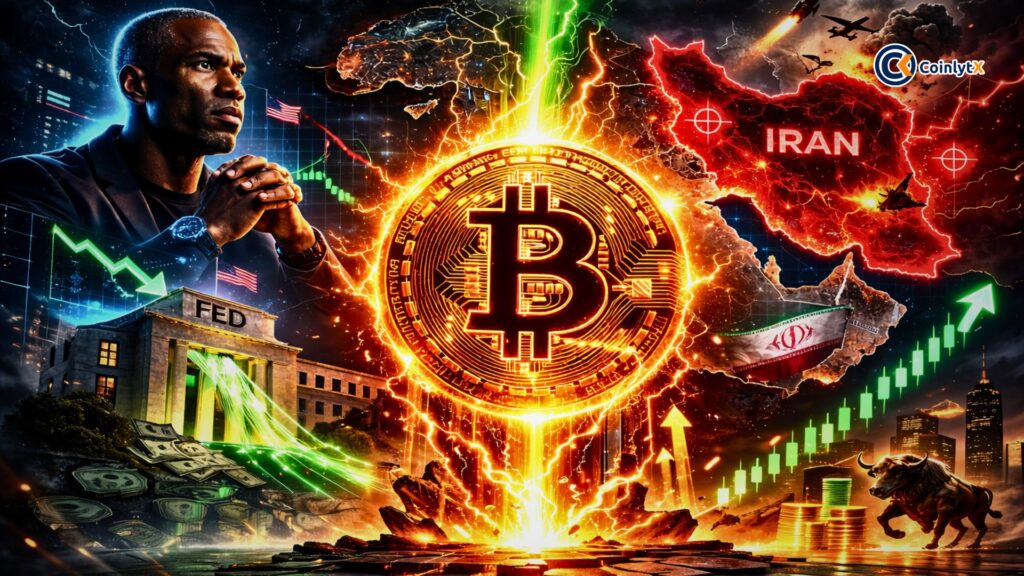
- Prolonged Iran operations raise fiscal pressure and increase the chances of the Federal Reserve policy easing.
- Historical Middle East wars show a pattern between higher spending and later monetary expansion.
- Bitcoin and risk assets may respond to liquidity shifts driven by war-related policy actions.
iOS Warfare frames U.S. involvement in Iran as a fiscal catalyst that could influence Federal Reserve policy. The thesis connects rising military costs with historical patterns of monetary easing and market reactions.
Fiscal Pressure From Prolonged Military Engagement
iOS Warfare presents the view that extended U.S. operations linked to Iran will expand federal spending. Higher defense and reconstruction costs place pressure on public finances.
This environment increases expectations of future monetary accommodation as outlined by Arthur Hayes, co-founder of BitMEX.
In a post shared on X, Hayes wrote that prolonged military engagement historically leads to policy shifts. He tied fiscal strain to later actions by the Federal Reserve.
Hayes described the connection as structural rather than political. When government spending rises rapidly, financing conditions become a concern for policymakers.
Monetary tools then emerge as a mechanism to stabilize markets and manage borrowing costs.
Historical Pattern of Middle East Conflicts
iOS Warfare grounds its thesis in past U.S. conflicts across the Middle East. Earlier wars were followed by adjustments in interest rates and liquidity provision.
These actions coincided with periods of economic uncertainty and declining confidence. The essay references the Gulf War and the post-2001 global campaign against terrorism.
During both periods, fiscal expansion was later met with lower policy rates. Monetary easing supported recovery while absorbing the costs of prolonged engagement.
A tweet cited in the analysis states that history offers guidance for present conditions. Hayes wrote that wars increase budget demands, which eventually shape central bank responses.
This reasoning treats monetary policy as reactive to geopolitical spending cycles.
Bitcoin and Risk Assets Under Monetary Expansion
iOS Warfare links these policy shifts to potential outcomes for digital assets. Lower interest rates and higher liquidity often raise demand for alternatives to fiat currencies.
Bitcoin is positioned within this framework as a market-sensitive instrument. The commentary notes that Bitcoin has previously benefited from periods of expanded money supply.
While not framed as a forecast, the historical pattern is emphasized. Hayes associates easing cycles with stronger performance across risk assets.
In discussing Iran-related operations, the essay mentions statements connected to Donald Trump and regional leadership under Ayatollah Khamenei. These references place the analysis within a current geopolitical context.
The focus remains on fiscal duration rather than political outcomes. iOS Warfare argues that the longer the conflict persists, the stronger the probability of monetary intervention.
This approach treats Bitcoin and similar assets as responsive to macroeconomic policy decisions. The analysis presents a continuity between past conflicts and present expectations.
The thesis does not claim certainty in price direction. Instead, it frames Bitcoin’s relevance through the lens of liquidity cycles.
Investors are encouraged to observe central bank actions tied to wartime spending rather than short-term market reactions. iOS Warfare, therefore, positions military duration, fiscal expansion, and monetary easing within one analytical sequence.
The narrative relies on historical evidence from previous Middle East conflicts. Bitcoin and risk assets are described as potential beneficiaries of this recurring policy pattern.