
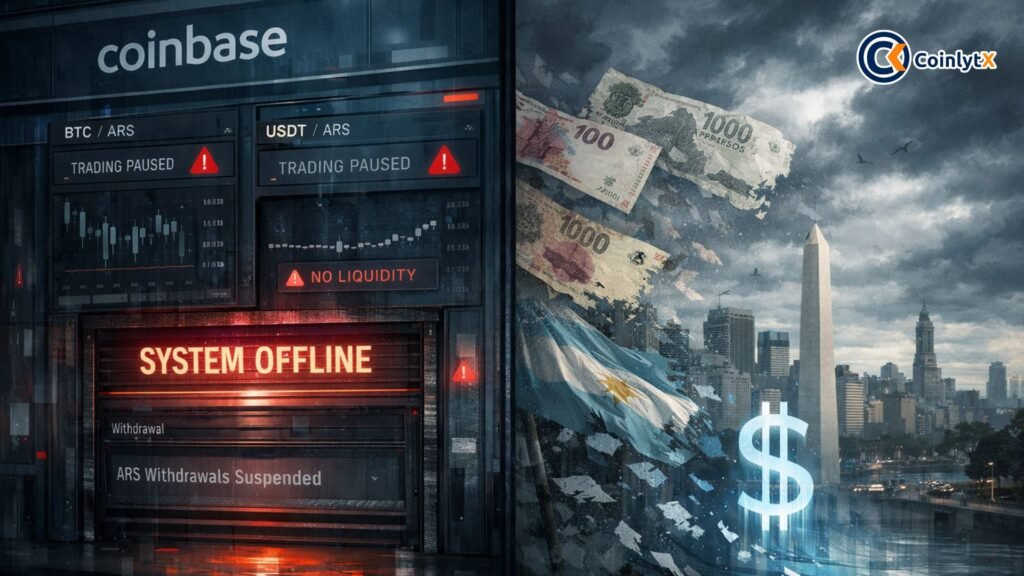
Coinbase Halts Argentine Peso Services Within a Year of Launch
Key Insights
01
Quick Takeaways Coinbase Scales Back Local Fiat Services Crypto exchange Coinbase has paused its local fiat operations in Argentina.
02
The decision comes less than a year after the company formally entered the market.
03
According to Forbes Argentina, Coinbase informed users of a temporary halt.
Quick Takeaways
- Coinbase has suspended peso-based USDC on- and off-ramps in Argentina from Jan. 31, 2026.
- Crypto trading and transfers remain fully operational for local users.
- The move highlights ongoing challenges with fiat integration in volatile markets.
Coinbase Scales Back Local Fiat Services
Crypto exchange Coinbase has paused its local fiat operations in Argentina. The decision comes less than a year after the company formally entered the market. According to Forbes Argentina, Coinbase informed users of a temporary halt. The company described the move as a “deliberate pause” after reviewing operations.
The change affects peso-based services tied to stablecoins. From Jan. 31, users can no longer buy or sell USDC using Argentine pesos. Withdrawals to local bank accounts will also stop. Coinbase gave users a 30-day window to complete peso-related transactions.
The exchange stressed that the pause is not a full exit. It said it plans to reassess and return with a more sustainable offering.
Crypto Trading Remains Fully Active
Despite the suspension of fiat rails, Coinbase’s core crypto services remain live. Users can continue trading, sending, and receiving digital assets. Crypto-to-crypto transactions are unaffected by the decision. Customer funds also remain secure on the platform, according to Coinbase.
The exchange emphasized that only local currency access is impacted. Stablecoin and token balances will remain accessible after the cutoff. This distinction is critical in Argentina’s inflation-driven crypto market. Many users rely on crypto rails even without direct fiat gateways.
Coinbase said it will continue monitoring user needs. Any future changes will be communicated directly to customers.
Regulatory and Banking Friction in Focus
Industry observers say the move reflects structural challenges. Local fiat operations often face complex regulatory and banking hurdles. Web3 advocate Ana Gabriela Ojeda highlighted these issues on X. She pointed to unclear rules, correspondent bank reliance, and high compliance costs.
Limited transaction volumes can also strain the business case. Volatile currencies add operational and liquidity risks for global exchanges. Ojeda said the decision does not signal hostility toward crypto. Instead, it underscores the difficulty of integrating local financial systems.
Argentina has long struggled with capital controls and inflation. These factors complicate stable fiat on- and off-ramps for exchanges. Coinbase has not publicly detailed its specific challenges. The company did not respond to requests for comment at publication.
Argentina Strategy Shifts, Not a Full Retreat
While fiat currencies are paused, Coinbashi has not forgotten Argentina entirely. The company strives to preserve a presence through its Base network. Base is Coinbase’s Ethereum layer-2 blockchain. It concentrates on scale, scurvy fee, and developer adoption.
Forbes Argentina describes ongoing cooperation with local partners. These include crypto exchange Ripio on Base-refer initiatives. Coinbase announced its Argentina launch in 2025. The movement followed months of preparation amid rising crypto adoption.
The rural area gives one of Latin America’s highest crypto exercise rates. Stablecoins often serve as a hedge against peso depreciation. Separately, Argentina’s key bank building is weighing crypto reforms. Officials are reportedly drafting rules to allow banks to switch digital assets.
If approved, such changes could reshape the local crypto landscape. They may also amend the shape for global exchanges. For at present, Coinbase’s pause reflects caution rather than retreat. The society appears focused on recollective-terminus sustainability over rapid expansion.
The instalment highlights an unspecific trend in emerging markets. Crypto needs are strong, but fiat integration remains fragile. Whether Coinbase will reactivate peso rails will depend on the regulators and banks. Until then, Argentine users will trust in crypto-native pathways.
The decision may also influence other maneuvering locally. Argentina remains a key test case for global crypto adoption.