
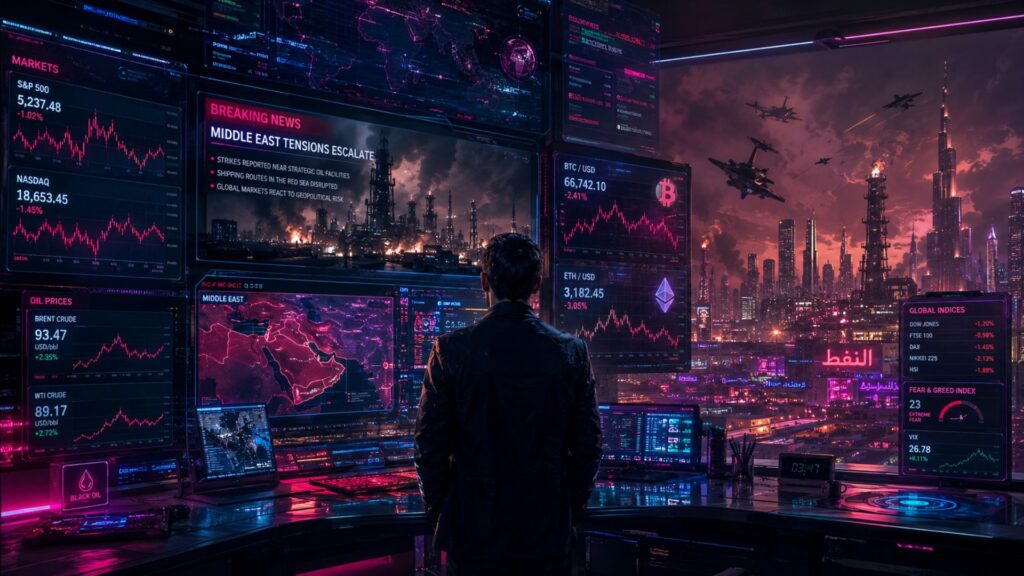
Traders believed charts were the fastest way to understand market direction. Candlestick patterns, support levels, indicators, and technical setups became the center of trading decisions. But recently, many experienced investors and institutions have started paying closer attention to something outside the chart of global events.
One of the biggest areas attracting attention today is the Middle East. The reason is simple: markets move not only because of technical signals but also because of events that influence oil, trade, inflation, and investor confidence.
Why Middle East News Matters to Global Markets
The Middle East plays a major role in the global economy because of its influence on energy supply and international trade routes. Whenever tensions increase, markets quickly react.
Investors begin asking important questions ,Will oil supply be affected, Will transportation costs increase, Could inflation rise again, Will global growth slow down
These expectations alone can move markets before any real economic impact appears.
That is why institutional investors often track geopolitical updates alongside market data.
Oil Is the First Market to React
Oil is usually the first asset that responds to Middle East developments. Even small concerns about supply disruptions can influence energy prices. Higher oil prices affect:
• Manufacturing costs
• Transportation expenses
• Consumer spending
• Business profitability
When energy becomes expensive, investors reassess risk across stocks, commodities, and digital assets. This chain reaction makes geopolitical news impossible to ignore.
Why Charts Alone Are Not Enough
Technical analysis remains useful. Charts help identify trends,momentum, and possible entry points but charts cannot predict sudden announcements, diplomatic developments, or geopolitical events.
A perfect chart setup can fail if unexpected global news changes market sentiment.
That is why many professional investors combine Technical analysis , Economic data, News flow Risk management , Global event monitoring.
Markets today move faster than ever because information spreads instantly.
How Crypto and Stocks Respond
Modern markets are highly connected.If oil rises sharply
• Inflation concerns may return
• Investors become cautious
• Risk assets may face pressure
At the same time, some investors search for alternative opportunities during uncertainty that creates volatility across both stock and crypto markets.
Understanding these relationships helps investors avoid reacting emotionally.
Conclusion
Charts still matter, but markets are becoming increasingly connected to global events.
Middle East developments have become one of the major variables influencing oil, inflation expectations, and investor sentiment.
The investors who understand both price action and world events often gain a broader view of where markets may move next.