

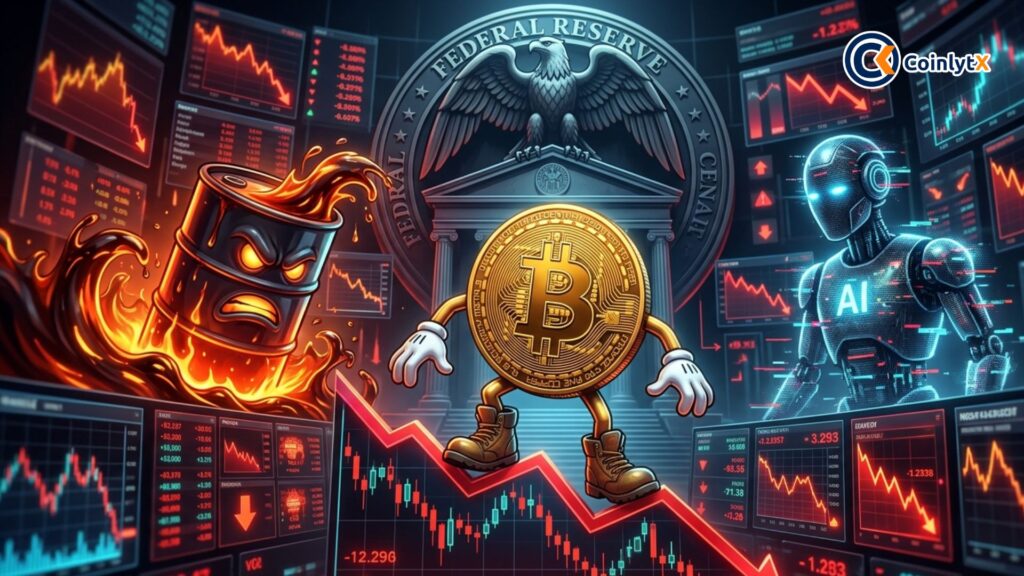
Bitcoin market has recently been facing pressure as investors react to several macroeconomic factors.
From uncertainty around Federal Reserve policy to rising oil prices and slowing momentum in the AI sector, multiple forces are affecting market sentiment.
While Bitcoin remains one of the strongest digital assets, these outside factors can still influence short-term price movements.
What is the reason behind this
One major reason behind the pressure is uncertainty around Federal Reserve decisions.
Interest rate expectations often play a big role in risk markets, including cryptocurrencies.
When investors are unsure whether rates will stay high or move lower, many become cautious. This can reduce buying activity in Bitcoin and lead to short-term volatility.
Higher interest rates often make traditional assets like bonds more attractive, while risky assets such as crypto can see reduced demand. That is why every signal from the Fed is closely watched by Bitcoin traders.
Oil price is also a factor
Another factor creating pressure is rising oil prices. When oil moves higher, inflation concerns can return.
Higher inflation may lead central banks to keep monetary policy tighter for longer. This can affect global markets, including crypto.
Oil prices can also increase concerns about economic growth and geopolitical risks.
In uncertain market conditions, investors sometimes reduce exposure to volatile assets like BTC, which can create temporary selling pressure.
Third reason
A third reason being discussed is the slowdown in AI-related market momentum. Over the past year, artificial intelligence has driven strong excitement across financial markets.
If growth in that sector begins to cool, overall risk sentiment may weaken. This matters because Bitcoin often reacts to broader investor sentiment.
When traders become less aggressive in technology and growth sectors, crypto markets can also feel the impact.
However, pressure does not always mean long-term weakness. Many analysts see these factors as short-term headwinds rather than a change in Bitcoin’s long-term outlook.
Bitcoin has historically moved through periods of macro uncertainty and often regained strength when market conditions improved.
What is the investor thinking?
Some investors even view pullbacks during uncertain periods as opportunities, especially when long-term adoption trends remain intact.
Institutional interest, Bitcoin ETFs, and broader crypto adoption continue to support the bigger picture.
What makes the current market interesting is the mix of macro and sector-specific forces moving together.
Fed uncertainty affects liquidity, oil impacts inflation expectations, and AI slowdown can influence risk appetite. Combined, they can create short-term caution in the market.
For traders and investors, the key is watching whether these pressures continue or begin to ease. Changes in Fed signals, energy markets, or improving sentiment in technology could help support Bitcoin again.
Conclusion
In the bigger picture, Bitcoin remains closely tied to both macroeconomic trends and investor confidence. While uncertainty may create volatility, it also reminds the market that crypto does not move in isolation.
As the market watches the next moves from the Fed, oil prices, and broader risk sentiment, Bitcoin could remain sensitive in the near term. But for long-term believers, these periods often become part of the larger market cycle rather than the end of the story.