

Quick Takeaways
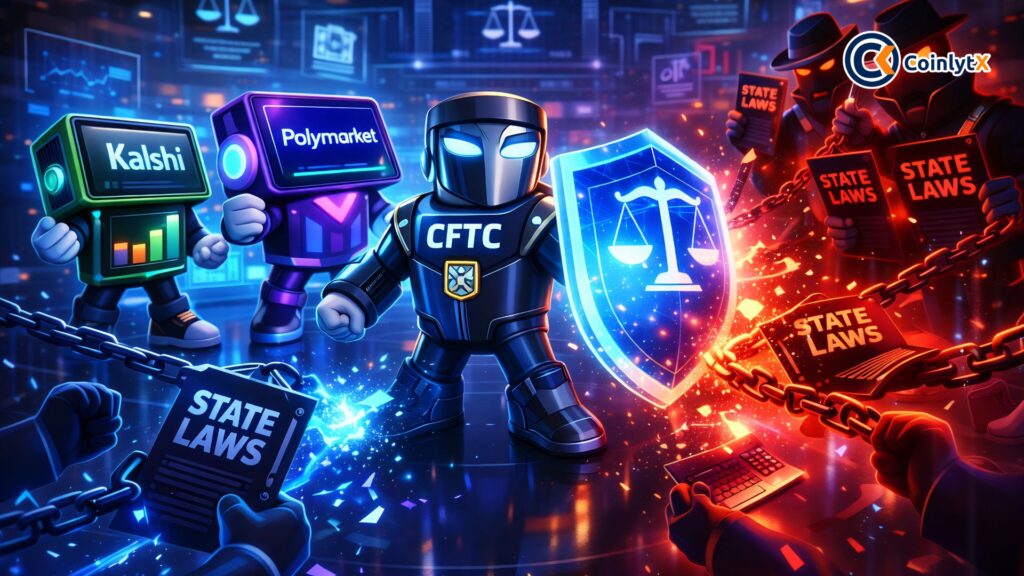
- The CFTC seeks an emergency injunction to stop Arizona from enforcing gambling laws.
- Trump Jr. has advisory roles in Kalshi and Polymarket amid federal legal action.
- The agency has sued states for the first time in its 50-year history.
The Commodity Futures Trading Commission has escalated its legal battle over prediction markets. The agency is now seeking emergency relief to block state enforcement actions.
The move targets Arizona’s attempt to apply gambling laws to prediction platforms. It marks a historic shift in federal regulatory strategy. The agency has never sued a state before this month.
The case raises serious questions about federal authority and political influence. It also places crypto-linked prediction markets under intense scrutiny.
Historic Federal Action Against State Enforcement
The CFTC filed for a preliminary injunction and temporary restraining order against Arizona. The goal is to stop the state from prosecuting prediction market platforms.
Arizona had filed criminal charges against Kalshi earlier this year. The state accused the platform of illegal gambling and election wagering.
The CFTC argues that such actions violate federal law. It claims exclusive authority under the Commodity Exchange Act. This law governs event-based contracts and derivatives.
The agency also sued Connecticut and Illinois last week. This marks the first time in its 50-year history that it has sued states. The legal escalation signals a major shift in enforcement strategy.
Trump Family Ties Raise Conflict Concerns
Trump Family Ties Raise Concerns About Conflicts. The controversy is getting worse because of Donald Trump’s family connections. Donald Trump Jr. works with Kalshi as an advisor.
He also helps advise Polymarket. His investment firm, 1789 Capital, put a lot of money into Polymarket in 2025. This connection has raised concerns about conflicts of interest.
Some people think that if the government takes action it might help websites connected to politicians. The timing of the lawsuits has made lawmakers and analysts take a look.
The Commodity Futures Trading Commission says its actions are about defending rules. The mix of politics and business makes the situation complicated. The Trump family’s ties to these platforms are raising concerns. The government needs to be careful in this situation.
Expanding Network of Corporate and Political Links
The situation involves multiple major companies across crypto and finance. Crypto.com partnered with Trump Media & Technology Group. Together, they are building a prediction platform called Truth Predict.
Robinhood has also entered the picture. The firm will act as brokerage and trustee for related accounts.
Both companies received cease-and-desist letters from states involved in the lawsuits. This places them directly in the regulatory crossfire.
Financial contributions add another layer of complexity. Reports indicate Crypto.com donated millions to political groups tied to Trump. These links continue to raise questions about influence.
Legal Battle Could Reshape Prediction Markets
Legal experts think this case could change how prediction markets work. Todd Phillips said these lawsuits are trying to change how regulations are done.
State officials really disagree with what the CFTC thinks. William Tong called these platforms gambling operations. He said he will defend laws that protect consumers in his state.
The Ninth Circuit Court will listen to arguments on April 16. This case involves Kalshi, Robinhood, and Crypto.com. What happens could decide who gets to regulate these markets.
If the court agrees with the CFTC, prediction markets might have to follow one set of rules. If states win, companies might have to follow rules in different places.
What This Means for Crypto and Regulation
The problem we are seeing is that state and federal regulators do not agree. This is also because crypto-linked products are changing very fast.
Crypto is a part of the digital economy now. People who invest money and regulators are both very interested in it.
The CFTC is very strong about supporting crypto. Some people are worried that politics will make people not trust it.
What happens in this case will be important for a time. It will show how digital assets like crypto work with the law.
Now the crypto industry is not sure what will happen. The fight between the government and the states is not over yet.
The courts are looking at all the arguments, and the future of crypto is waiting to see what they decide.