

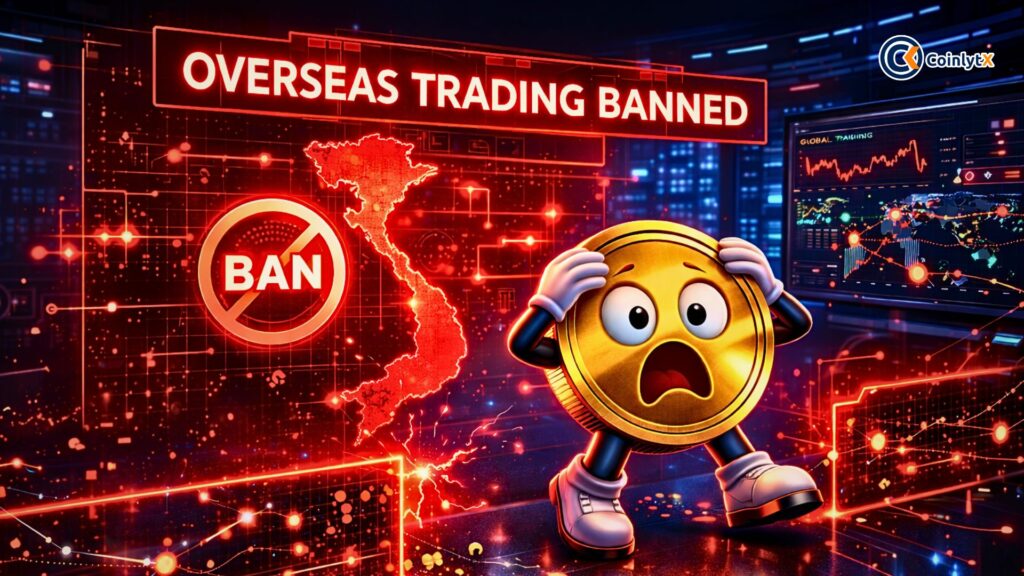
- Vietnam crypto ban proposal targets overseas platforms to limit capital outflows and improve domestic regulatory oversight mechanisms.
- Five major Vietnamese firms have passed initial screening for the country’s first licensed crypto exchange pilot program.
- Authorities aim to redirect over $200 billion in annual crypto trading into regulated domestic financial systems.
Vietnam’s crypto ban plans are advancing as authorities prepare a domestic exchange pilot program, marking a shift toward tighter control of digital asset trading.
Regulatory Shift Toward Domestic Crypto Control
The Vietnamese Ministry of Finance document dated March 12 outlined a proposal to restrict citizens from using overseas cryptocurrency platforms.
Authorities are also accelerating a pilot program for domestic digital asset exchanges. The government resolution issued in February set the groundwork for launching the pilot program within weeks.
The objective is to improve oversight of trading activity and financial flows in a controlled rollout of compliance structures. The Vietnam crypto ban strategy aligns with broader efforts to tighten financial supervision.
Five Firms Compete for First Exchange Licenses
Five Vietnamese entities have passed the initial qualification round for the pilot program. These include affiliates linked to Techcombank, VPBank, and LPBank, alongside VIX Securities and Sun Group.
Sun Group and VPBank are among Vietnamese exchanges that have publicly confirmed their license applications as regulators evaluate technical and financial readiness.
A tweet circulating among market watchers stated, “Vietnam is moving fast to localize crypto trading infrastructure.” The comment reflects growing attention on the licensing race.
The Vietnam crypto ban could shift market dynamics toward domestic platforms if approvals proceed.
Market Size Drives Policy Urgency
Vietnam ranks among the world’s most active cryptocurrency markets. Data from Chainalysis placed the country fourth globally in crypto adoption, with annual transaction volumes exceeding $200 billion.
As a result, authorities have raised concerns about capital flight linked to digital assets and stablecoins for strict cross-border fund transfers when moving capital.
This environment has increased regulatory urgency. Domestic investment options remain limited, with a small corporate bond market and a frontier-level stock exchange.
As a result, many investors prefer gold or real estate, both prone to volatility. The ban aims to redirect digital trading into monitored systems.
Challenges for Local Exchanges and Global Platforms
Phan Duc Trung, chairman of the Vietnam Blockchain and Digital Asset Association, emphasized domestic exchanges over overseas platforms.
He stated that local platforms could retain trading fees within the country and support the growth of digital finance. However, regulatory gaps remain a concern.
A widely shared tweet noted, “Local exchanges must match global standards, or users will resist switching.” This reflects skepticism about user migration.
The Vietnam crypto ban may face resistance if domestic platforms cannot compete with international platforms.
Regulatory clarity on taxation, compliance, and risk management will give a transition toward a structured digital asset ecosystem.