A cryptocurrency wallet is the gateway to blockchain-based digital assets. Despite the name, a crypto wallet does not physically store coins or tokens. Instead, it manages the private keys n...
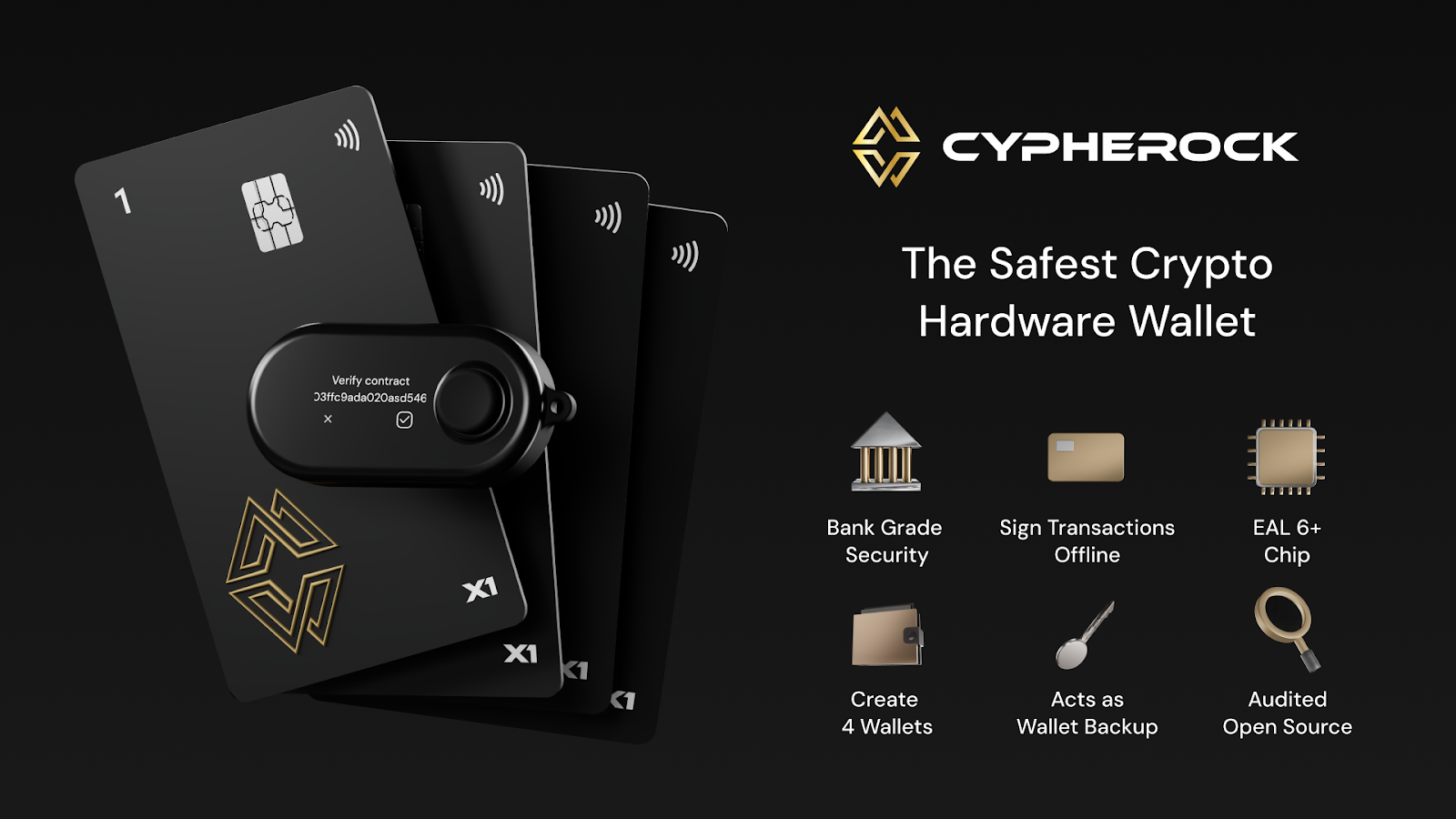
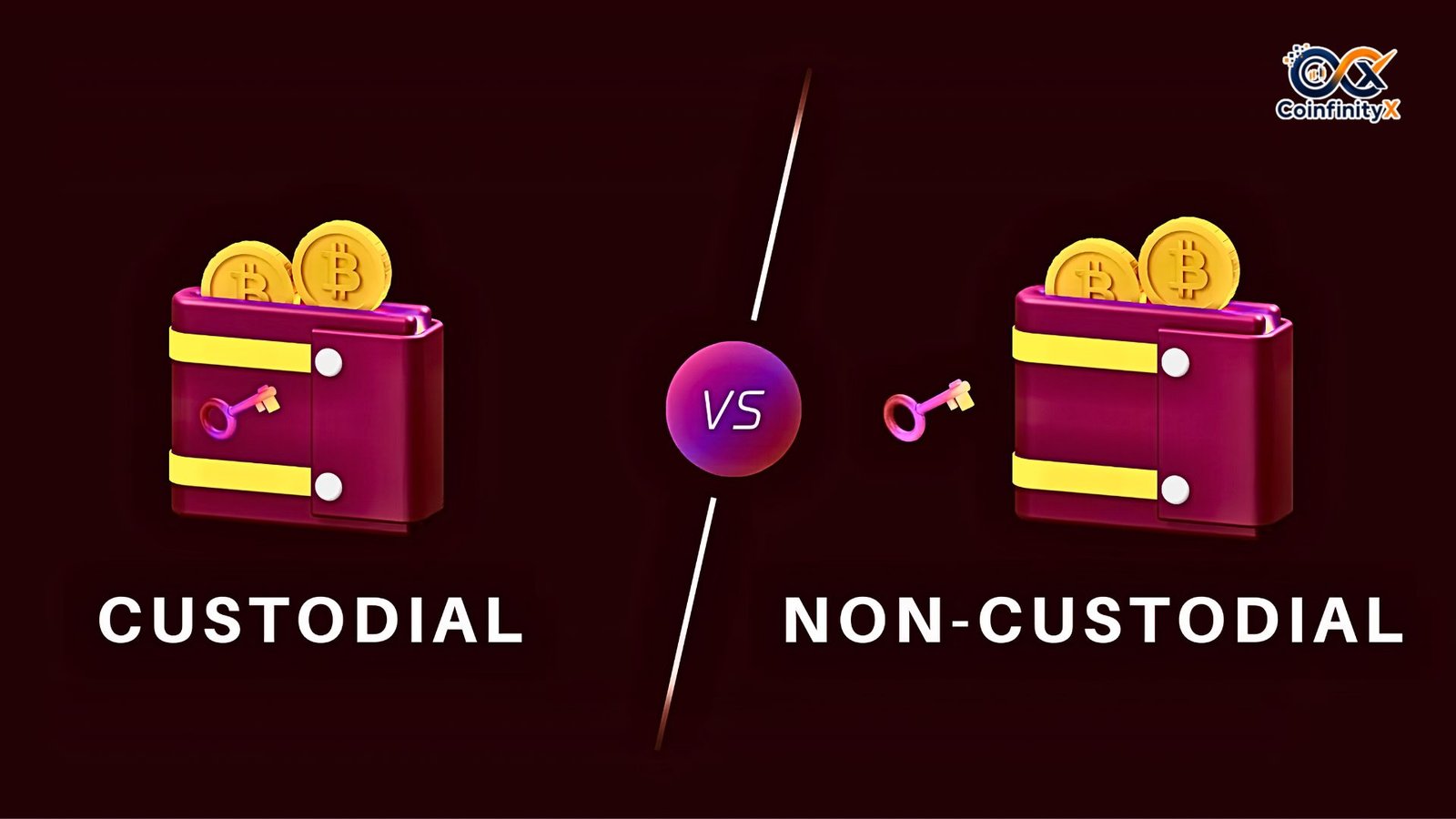
A cryptocurrency wallet is the gateway to blockchain-based digital assets. Despite the name, a crypto wallet does not physically store coins or tokens. Instead, it manages the private keys needed to prove ownership of assets associated with a particular blockchain address. The way those private keys are controlled creates two major wallet categories: custodial and non-custodial wallets. The distinction is simple: with a custodial wallet, the private keys will be managed by a third party, and with a non-custodial wallet, the private keys will be managed by the user. These differences impact the security, privacy, recovery, convenience, and user experience of blockchain networks. Custodial vs. Non-Custodial Wallets Feature Custodial Wallets Non-Custodial Wallets Private key control Third-party provider User Security responsibility Mainly provider Mainly user Recovery Password/support-based recovery may be available Recovery phrase is generally required Ease of use Beginner-friendly Requires more responsibility Transactions Often faster within the provider’s ecosystem Depends on the blockchain Regulatory oversight Generally more subject to regulation Generally less dependent on a custodian KYC Common with centralized providers Wallet creation generally does not require KYC dApp access May be limited Broad access to Web3 applications Main risk Custodian failure or restrictions Key loss, scams, or user error Control Relies on the provider Full user control Finally, it’s between control and convenience. Custodial wallets offer an easy way to manage cryptos, as the provider handles the security and recovery. Non-custodial wallets offer more autonomy, but they’re up to each user to keep safe. What is a Custodial wallet? Also known as a third-party wallet, a custodial wallet is one that stores and controls the private keys for a user. If you’re a novice, it can be akin to using online banking. The user registers, sets a password, activates 2FA and logs in via an app or website to access their crypto. The provider takes care of the underlying private-key management. Once a user requests a transaction, the provider signs and sends the transaction to the blockchain using the keys that it holds. An outstanding benefit is account recovery. Custodial platforms can offer password reset, identity verification or customer support in case the users forgot their passwords. This can make it appealing to individuals that are not comfortable handling recovery phrases. Security for assets can be further provided by custodians through the use of security measures, including cold storage, encryption, access control and multisignature authorisation. The convenience comes with trust, however. The provider may apply withdrawal caps, block transfers, request identification or ban accounts as a result of regulations or investigations. In the event of a significant security breach, a financial failure or extended outage at the custodian, users may find it difficult to gain access to their assets. What Is a Non-Custodial Wallet? In a non-custodial wallet, users have full control of their private keys. The user is not relying on an exchange or financial service anymore, but handles the credentials that are needed to facilitate transactions. Users will usually be given a 12 or 24-word Secret Recovery Phrase (or seed phrase) when they create a non-custodial wallet. This phrase can be used to re-derive private keys of the wallet. The basic idea is that the one who has the private keys has the assets. Non-custodial wallets are particularly popular among people who use decentralized finance (DeFi), decentralized exchanges, NFTs, and other Web3 applications. Instead of putting resources with a central stage, clients can link their wallet straight to a decentralized application and concur exchanges on their own. This gives a lot of freedom. A non-custodial wallet does not usually have a company behind it that would be able to do so based on their policies. Users are able to communicate with the supported blockchain networks without needing to obtain permission from a central authority. The alternative to the trade-off is responsibility. There is no option to reset the password, as such. If a user loses their recovery phrase and has no valid backup, access to the wallet may be permanently lost. Software and Hardware Non-Custodial Wallets There are different types of non-custodial wallets such as software wallets or hardware wallets. Software wallets come in the form of mobile apps, desktop software, or browser extensions. They’re quick and easy, and they enable users to interact with blockchain applications rapidly. They, however, are exposed to malware, phishing attacks, malicious extensions and other cyber security threats since they are running on internet connected devices. Hardware wallets, on the other hand, are physical wallets that store private keys in a more secure setting. They can also offer an extra level of security by isolating critical functions from the standard operating system of a cell phone or computer. What is important is that both are not “custodial” when the user keeps the keys with himself. Security & Privacy: Custodial vs. Non-Custodial The way in which security works is different under the two models. The custodial wallet partner is responsible for safeguarding the large sums of client funds. This can give high-tech security equipment but it also gives them a point target to attack. In many cases, all the customers are affected by a breach, operational failure, insolvency or regulatory action all in one. The threat is more personal with a non-custodial wallet. Users are not exposed to the failure of a central custodian, except that they have to take care of their devices, private keys and recovery phrases. There can also be varying levels of privacy. Account registration and Know Your Customer (KYC) checks are typically requirements for custodial services and may also be mandated by the service and/or jurisdiction. This can link a user together with their cryptocurrency pursuits. Typically non-custodial wallets can be set up without the establishment of a regular financial account. This doesn’t mean that blockchain transactions are completely anonymous, however. Many networks have transaction activity and addresses that remain public. Usability and Recovery Usability problems with the two models are most obvious when things go wrong. Customer support, password recovery, and account-management systems are all features
One of the longstanding hurdles facing the decentralized finance (DeFi) industry is achieving the same speed and efficiency of centralized exchanges while maintaining the transparency and self-custody features of blockchain-based trading. The decentralized finance (DeFi) sector has been working on finding a solution for this challenge for years, aiming to replicate the capabilities of centralized exchanges while keeping the transparency and self-custody aspects of blockchain trading. Although decentralized exchanges (DEXes) have become a staple in the crypto space, they do come with some drawbacks in terms of execution speed, depth of liquidity, and trading features. This has led traders to often switch between centralized and decentralized platforms, resulting in a disjointed experience throughout the market. KalqiX is convinced that there no longer has to be a tradeoff. The project recently announced the launch of its Mainnet, which will feature a decentralized exchange (DEX) infrastructure that will integrate extremely fast trading with decentralized ownership and control. In addition to running its own exchange, the company is also creating its technology on offer to other projects on the basis of a white label framework, enabling protocols to roll out their own trading platforms on top of KalqiX technology. The action reflects a broader trend in DeFi that involves developing shared infrastructure instead of standalone, competing ecosystems. The Long-Standing Challenge of DEX Performance Since the emergence of decentralized exchanges, developers have struggled with a difficult balancing act. On-chain trading was previously made more accessible with conventional automated market makers (AMMs), though it could sometimes present problems like the slippage, fragmented liquidity, and limited order functionality. Centralized trading, on the other hand, maintained its dominance in terms of trading volume as a result of speed, trading tools, and liquidity pools. Numerous projects have tried to fill this gap, however, while delivering centralized exchange performance, it has been one of the most challenging engineering problems in the industry to keep the principles of decentralization intact. KalqiX’s perspective on this conversation is different. The platform does not only use the infrastructure based on AMM for trading; it also employs a centralized limit order book (CLOB) model, a trading mechanism used in traditional financial markets and key centralized crypto exchanges. The aim is to give users the same trading capabilities, like advanced trading strategies and limit orders, without compromising on-chain settlement or self-custody. A White-Label Approach to Exchange Infrastructure A key aspect of the Mainnet launch is that KalqiX is positioning its infrastructure as a resource that other blockchain projects can build on and utilize. The development of a decentralized exchange generally involves a considerable amount of resources, raising liquidity, security audits, and a continuous maintenance process. These provisions can also present significant obstacles for smaller projects or communities that wish to provide trading services to their users. KalqiX’s white-label model aims to reduce those barriers. The project states that protocols can set up their own brand exchange environment in less than an hour on KalqiX’s infrastructure. Projects can use existing liquidity systems and infrastructure without the need of creating matching engines and backend from scratch and keep their own community and branding. This reflects a wider trend in the entire blockchain sector, which is increasingly a sector in which infrastructure vendors now centre on creating emerging ecosystems instead of the standalone products. As long as the model is successful, this process could enable more communities to join in the decentralized trading process without investing heavily in building exchanges. Tackling Liquidity Fragmentation One of the biggest challenges in DeFi is still the liquidity fragmentation. New layer-1 and layer-2 chains are emerging to the market, which is causing liquidity to be fragmented across chains, protocols, and trading venues. This is often the case, causing capital inefficiency, uneven spreads, and pricing disparities between platforms. For KalqiX this is the very essence of their ecosystem: positioning shared liquidity at its core. Projects built on the network can access a shared liquidity environment, instead of having to build liquidity on each exchange deployment individually. The idea is to deepen the markets and enhance market conditions for all players in the market. In the realm of DeFi, shared liquidity models are now receiving more and more interest, as they present a possible solution to one of the industry’s most enduring scaling issues. Platforms can also benefit from providing a single network for trading, which can improve execution quality and decrease inefficiencies from decentralized liquidity pools. It’s an emerging space to experiment with in decentralized finance that may or may not spread to other projects and market conditions, but it’s certainly something to keep an eye on! The Role of Zero-Knowledge Technology Another key component of the platform’s architecture is its use of zero-knowledge technology. Over the last few years, Zero Knowledge Proofs have gone from being one of the most dormant branches in blockchain under development to being one of the most active. The technology can be used to verify information without revealing any underlying data to help improve scalability and efficiency without compromising security guarantees. KalqiX’s trading model is hybrid, ordering on off-chain with settlement on-chain, leveraging zero-knowledge technology. In the real world, orders can be matched in a low-latency matching engine, prior to finalization on-chain. The idea of this design is to eliminate the delays often experienced with full-chain order execution while maintaining transparency and auditability. Projects aiming at enhancing user experience while maintaining the decentralized concept have increasingly adopted hybrid architectures. For developers, it has always been a challenge to find the balance between speed, not trusting and securing. With advanced cryptographic infrastructure, KalqiX is another attempt to solve that problem head-on. Early Testnet Activity Provides Initial Signals Mainnet was preceded by a public testnet that was used to test the performance and stability of the network. The testnet had a total of over 2,300 users and processed almost 40 million transactions placed by around 20 million orders, according to the figures shared by the team. The network was also tested to its 100,000th block. Testnet activity does

 MARKET